
Haib Cu-Mo-Au Project
Simple, scalable, predictable
Haib: A Major Copper Development in Namibia
Haib is one of Africa’s largest porphyry copper systems, combining substantial scale with a streamlined processing flowsheet. Straightforward geology and geography support the potential for low-cost, long-life production, with further opportunities for resource growth and expansion.
Key Highlights

100% Owned in Namibia
Wholly owned copper project in southern Namibia.

Large Copper Resource
Large copper resource with associated molybdenum and gold.

Extensive Technical Definition
Over 160,000 metres drilled supported by metallurigcal testing and technical studies.

Proximity to Infrastructure
Located near established roads, ports, grid power, water supply, and supportive regional centers.

Resource Expansion Potential
Potential to expand & upgrade the mineral resource through further drilling and regional targets.

Proven Namibian Develolment Team
Experienced leadership with a track record of advancing mining projects in Namibia.
Key Highlights

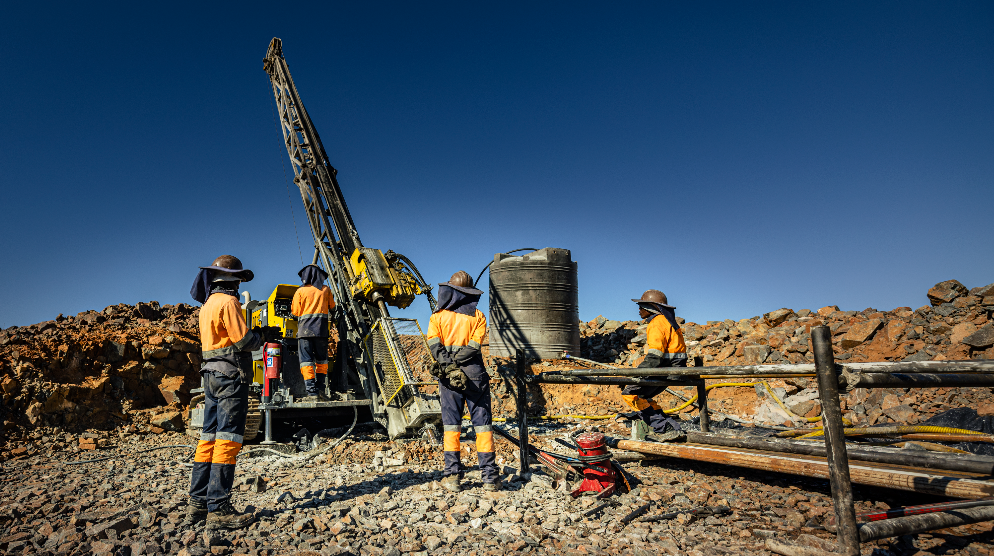
Koryx’s Haib Copper Project (100%-owned) is Namibia’s largest and most advanced undeveloped copper project. Located in the Karas Region of southern Namibia, near the South African border and close to existing infrastructure, Haib hosts a large copper-molybdenum-gold porphyry deposit, with a distinguished exploration pedigree involving Rio Tinto, Falconbridge and Teck.
Haib’s substantial mineral resource supports its potential to become a major, long-life open-pit copper operation. The PFS builds on this foundation with improved resource definition, a reserve-backed mine plan and a streamlined milling and flotation flowsheet. Ongoing drilling is focused on expanding and upgrading the resource, with opportunities for further growth beyond the current development plan.
As electrification and the energy transition drive demand for copper, we are advancing Haib towards definitive feasibility through metallurgical testing, engineering and permitting. Our focus remains on improving the development plan and establishing Haib as a significant future source of copper from Namibia.
Please explore our technical reports providing investors clear insight into the Haib project.
PFS Highlights
Key results
Key economic and operational results
from Pre-Feasibility Study (PFS)
—
—
Strong economics and long-life asset.
US$2.5B
After-tax NPV (8%)
24.9%
After-tax IRR
24 years
Life of Mine
145 ktpa
Avg. Annual CuEq Production (1st 10 Years)
US$2.06B
Initial Capital
US$1.72/lb
C1 Cash Cost (1st 10 Years)
US$2.07/lb
AISC (1st 10 Years)
0.45% CuEq
Flotation Feed Grade (1st 10 Years)
PFS builds on the PEA with flowsheet optimization, improved resource definition and defined infrastructure plans.
Increased processing capacity of 48 Mtpa, with coarse particle flotation (“CPF”) rejecting 25% of feed mass. All production through flotation, heap leaching removed with oxide and transitional material stockpiled for later treatment.
Mine plan prioritizes higher-grade sulphides to maximize early cash flow, followed by processing of lower-grade stockpiles after open-pit mining ends.
DFS completion targeted for Q4 2027, with metallurgical testing, engineering and permitting already underway.
2026 Updated Mineral Resource Estimate
| ResourceClassification | Tonnage (Mt) |
CuEq (%) |
Cu (%) |
Mo (ppm) |
Au (g/t) |
|---|---|---|---|---|---|
| IndicatedHigh Grade (>0.25% Cu) | 577 | 0.39 | 0.36 | 72 | 0.02 |
| IndicatedLow Grade (0.15–0.25% Cu) | 793 | 0.21 | 0.19 | 49 | 0.02 |
| Total Indicated | 1,371 | 0.28 | 0.26 | 59 | 0.02 |
| InferredHigh Grade (>0.25% Cu) | 107 | 0.36 | 0.34 | 48 | 0.02 |
| InferredLow Grade (0.15–0.25% Cu) | 222 | 0.20 | 0.19 | 37 | 0.02 |
| Total Inferred | 329 | 0.26 | 0.24 | 41 | 0.02 |
| ResourceClassification | Tonnage (Mt) |
Cu (Mlbs) |
Mo (Mlbs) |
Au (koz) |
|---|---|---|---|---|
| IndicatedHigh Grade (>0.25% Cu) | 577 | 4,563 | 92 | 427 |
| IndicatedLow Grade (0.15–0.25% Cu) | 793 | 3,312 | 86 | 465 |
| Total Indicated | 1,371 | 7,875 | 178 | 892 |
| InferredHigh Grade (>0.25% Cu) | 107 | 811 | 11 | 63 |
| InferredLow Grade (0.15–0.25% Cu) | 222 | 912 | 18 | 115 |
| Total Inferred | 329 | 1,723 | 30 | 178 |
| ResourceClassification | Tonnage (Mt) |
Cu (kt) |
Mo (kt) |
|---|---|---|---|
| IndicatedHigh Grade (>0.25% Cu) | 577 | 2,070 | 42 |
| IndicatedLow Grade (0.15–0.25% Cu) | 793 | 1,502 | 39 |
| Total Indicated | 1,371 | 3,572 | 81 |
| InferredHigh Grade (>0.25% Cu) | 107 | 368 | 5 |
| InferredLow Grade (0.15–0.25% Cu) | 222 | 414 | 8 |
| Total Inferred | 329 | 781 | 13 |
| ResourceClassification | Tonnage (Mt) |
Grade | Contained Metal | |||||||
|---|---|---|---|---|---|---|---|---|---|---|
| CuEq (%) |
Cu (%) |
Mo (ppm) |
Au (g/t) |
Cu (Mlbs) |
Mo (Mlbs) |
Cu (kt) |
Mo (kt) |
Au (koz) |
||
| IndicatedHigh Grade (>0.25% Cu) | 577 | 0.39 | 0.36 | 72 | 0.02 | 4,563 | 92 | 2,070 | 42 | 427 |
| IndicatedLow Grade (0.15–0.25% Cu) | 793 | 0.21 | 0.19 | 49 | 0.02 | 3,312 | 86 | 1,502 | 39 | 465 |
| Total Indicated | 1,371 | 0.28 | 0.26 | 59 | 0.02 | 7,875 | 178 | 3,572 | 81 | 892 |
| InferredHigh Grade (>0.25% Cu) | 107 | 0.36 | 0.34 | 48 | 0.02 | 811 | 11 | 368 | 5 | 63 |
| InferredLow Grade (0.15–0.25% Cu) | 222 | 0.20 | 0.19 | 37 | 0.02 | 912 | 18 | 414 | 8 | 115 |
| Total Inferred | 329 | 0.26 | 0.24 | 41 | 0.02 | 1,723 | 30 | 781 | 13 | 178 |
Explore Haib - 3D Site Tour
Discover Koryx Copper’s Haib Copper Project in southern Namibia through an interactive virtual site tour.
Explore the project, its landscape and key locations from different perspectives. Navigate between viewpoints, rotate the 3D view and zoom in to take a closer look.
History
Small-scale mining (from late 1800s)
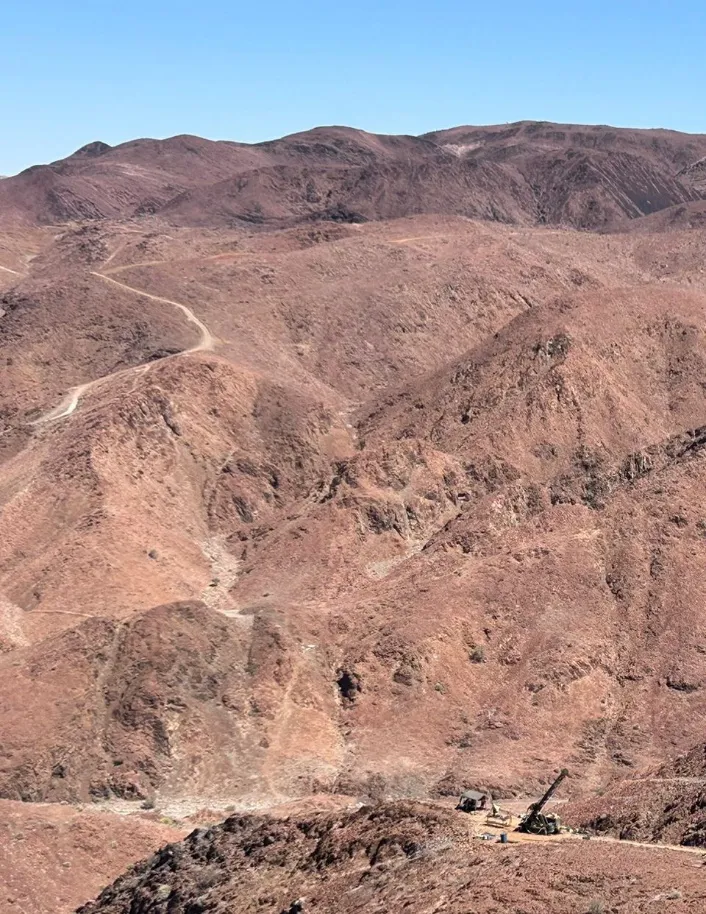
The Haib copper deposit is well exposed, with visible secondary copper minerals such as malachite and chrysocolla along fractures and river cuts – especially in the Volstruis (Ostrich) River that runs through the centre of the deposit. German prospectors were the first Europeans to recognise the mineralisation, carrying out small-scale mining between the late 1800s and early 1900s. Local prospector George Swanson played a long, intermittent role on the project from the post-WWII period into the early 2000s. Over the decades, he completed small-scale mining, operated leaching pads, and shipped hand-sorted high-grade copper to the O’okiep Copper Company in South Africa, 150 km to the south.
Early exploration (1960s–1970s)
Falconbridge (1963–1964) completed the first significant modern exploration program, including mapping, stream-sediment sampling, ground geophysics, and 11 diamond drillholes (1,012 m).
King Resources (1968–1969) followed with the first Induced Polarisation (IP) survey and drilled 21 diamond holes (3,485 m), broadening the early understanding of the system.
Rio Tinto Zinc (RTZ) optioned the project in late 1971 and completed a major, systematic work program from 1972–1975.
Their work included:
- extensive regional and detailed mapping
- a large IP/Resistivity program
- metallurgical testwork
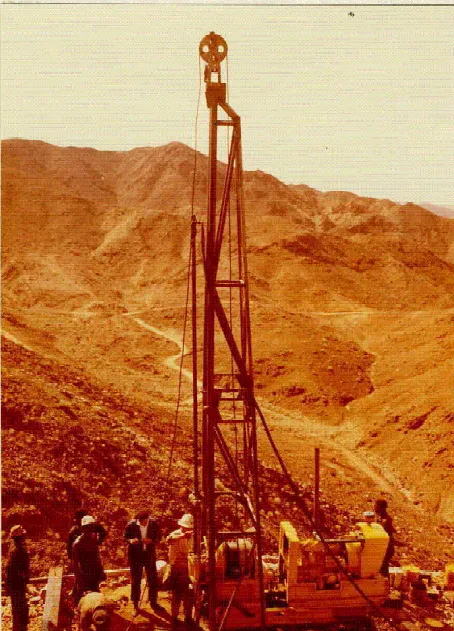
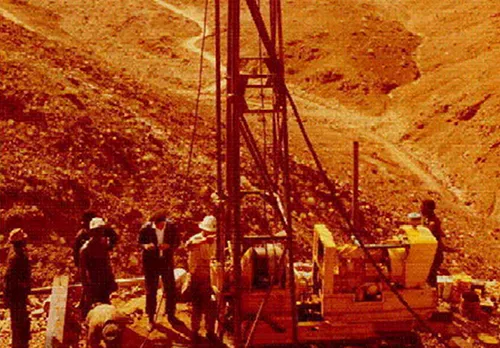
- 120 diamond drillholes (~45,900 m)
- drilling on a 150 m x 150 m grid using vertical holes
RTZ also assessed regional potential, including the Lorelei porphyry occurrence 120 km to the northwest. Their work remains a cornerstone of Haib’s modern geological understanding.
1990s attempts at development
Through the early–mid 1990s, several South African groups evaluated Haib as a potential “world-class copper producer for the 1990s,” completing desktop studies and economic analyses.
In 1995, Great Fitzroy Mines (GFM), Rand Merchant Bank (RMB) and George Swanson formed the Namibian Copper Joint Venture (NCJV).
NCJV’s work included:
- 12 diamond drillholes (~5,445 m)
- 5 geotechnical holes
- excavation of a 126 m adit and crosscuts
- metallurgical, milling, and grinding studies
A feasibility study followed in 1998, but activities ceased in 1999 due to difficult market conditions.
Modern licensing & ownership (2004–2017)
In 2004, Deep South Mining Co. was awarded EPL 3140 (74,563 ha).
The licence transferred to Haib Minerals (Pty) Ltd in 2013 and remains valid today at 36,589 ha. Haib Minerals is Koryx Copper’s Namibian subsidiary.
In 2008, Teck entered a joint venture and operated the project while earning a 70% interest.
Koryx Copper (then Deep-South Resources) acquired Teck’s 70% in 2017 and Teck still remains a significant shareholder today.
Teck’s contributions – re-evaluating potential
Teck’s program was designed to reassess both regional prospectivity and increase grade and tonnage potential at Haib. Their work included:
- remote sensing studies
- regional geophysical interpretations
- ground geophysics (IP/Resistivity and AMT)
- stream-sediment and soil geochemistry
- detailed “Anaconda-style” mapping
- relogging and resampling RTZ drill core
- 32 diamond drillholes (10,508 m at Haib, 3,745 m on satellite targets)
- the first modern 3D geological model of the deposit
- drilling inclined holes at Haib
Teck’s work significantly modernised understanding of Haib’s geometry and scale.
Recent work & strategic pivot (2018–present)
After Teck’s withdrawal, Koryx (then DSR) completed multiple studies, including a PEA in 2018 and an update in 2021. These assessments relied heavily on bio-leaching technologies, which the team no longer views as suitable.
In 2021, drilling began to upgrade the mineral resource classification but paused due to a licensing dispute, which was resolved in July 2023. Drilling resumed later that year and finished in Q2 2024.
In September 2024, a new management and technical team took over, marking a decisive shift toward accelerating the project towards development – aligned with the strong fundamentals of Haib and the project’s long history of work.
Location
2 km
North of the orange river
15 km
to the national highway
120 km
to rail at Grunau
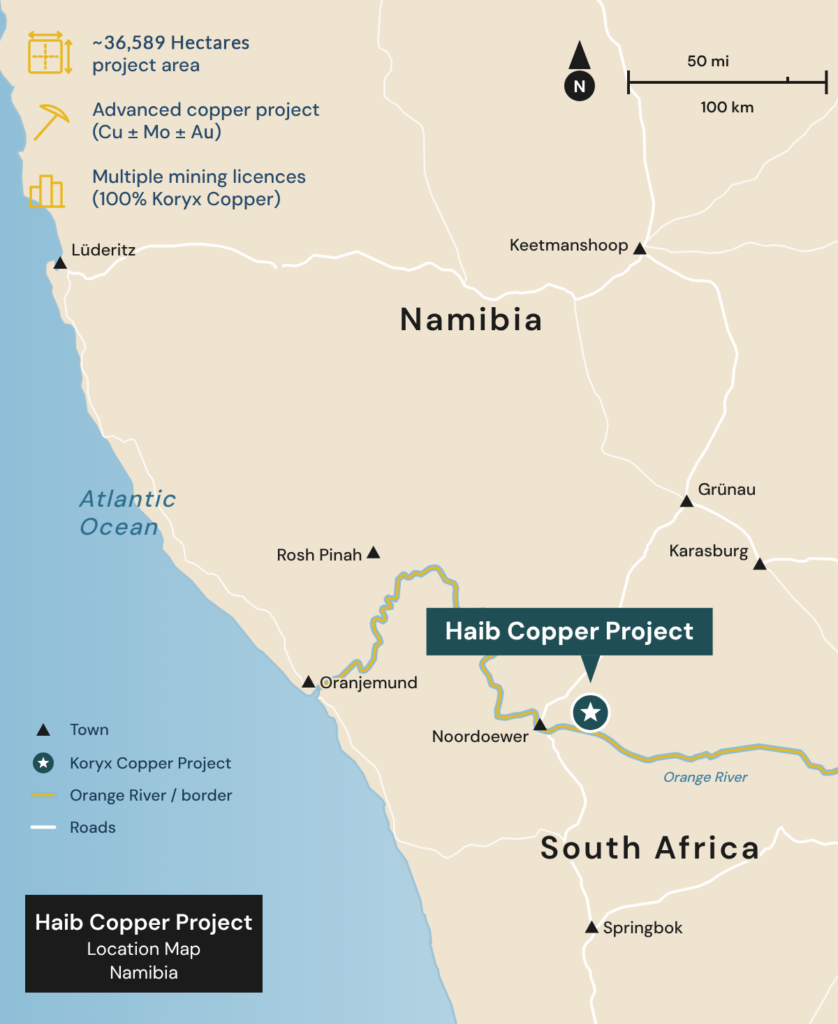
The Haib Copper Project sits in southern Namibia, close to the border with South Africa. The deposit lies just 2 km north of the Orange River, which forms the international boundary in this region. A major national highway connecting South Africa to Windhoek passes approximately 15 km west of the project, providing straightforward road access.
The nearest town, Noordoewer, is about 25 km southwest and supports the surrounding farming community. It also hosts the area’s customs and immigration facilities, serving as a key crossing point between Namibia and South Africa.
Rail access is available at Grunau, roughly 120 km to the north along the main highway. From there, material can be transported to Namibia’s ports at Lüderitz or Walvis Bay, or routed into South Africa via Ariamsvlei, around 180 km east of Haib. This network provides Haib with clear logistical pathways for future development and export.
Geology
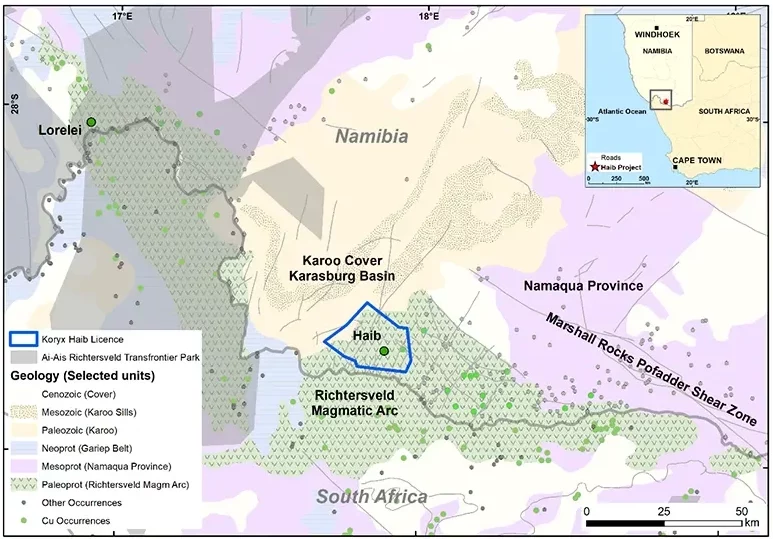
The Haib porphyry copper deposit lies within the Richtersveld Subprovince of the Namaqua–Natal Metamorphic Province. It forms part of the Palaeoproterozoic Richtersveld Magmatic Arc, a sequence made up of the Orange River Group (ORG) volcanic rocks (basaltic to rhyolitic) and the Vioolsdrif Intrusive Suite (VIS) plutonic rocks (mainly granites and granodiorites).
The host rocks at Haib have undergone up to four deformation events and regional metamorphism to greenschist facies. The area is also intruded by prominent, magnetic NE–SW trending Neoproterozoic dolerite–gabbro dykes.
Haib is one of only two known porphyry copper deposits in the Richtersveld Magmatic Arc, the other being the smaller Lorelei body located ~120 km to the northwest within the Ai-Ais National Park. At 1.9 Ga, Haib is one of the oldest porphyry copper deposits known, yet it retains the diagnostic characteristics typical of major porphyry systems despite its age and deformation history.
To the west, the Paleoproterozoic rocks are overlain by younger Karoo rocks of the Karasburg Rift Basin, consisting of basal tillite, limestones, siltstones, and shales. Cretaceous magnetic dolerite sills are common within the Karoo sequence.
Across the project, the ORG volcanics and VIS intrusives dominate the eastern half, while an unconformity marks the transition into Karoo sediments on the western half. The Haib volcanics consist primarily of Porphyritic (feldspar) Andesite (PA), with minor rhyolite in the north. The VIS intrusives form large granodiorite–granite batholiths cutting the Haib volcanic package.
Deposit geology
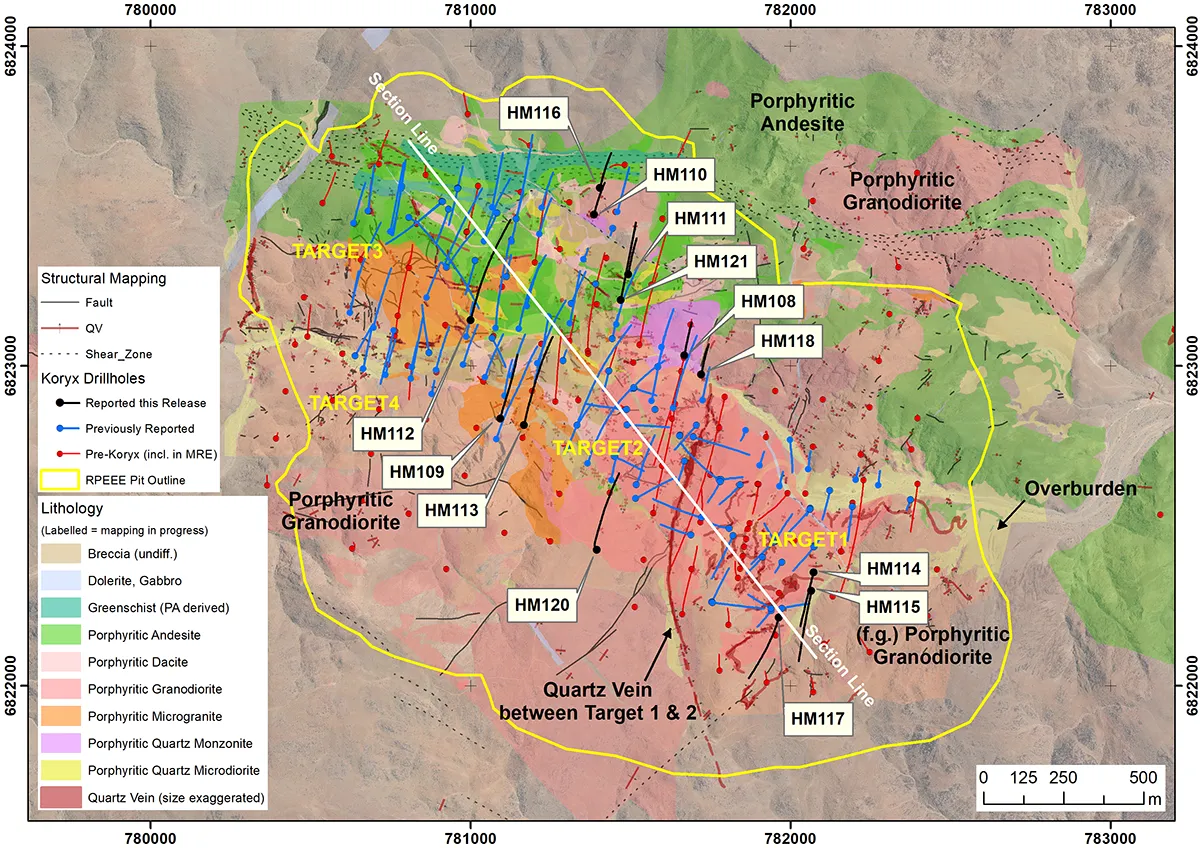
The dominant rock types at Haib are Porphyritic Granodiorite (PGD), Porphyritic (feldspar) Andesite (PA) and related hydrothermal breccias.
- The PGD intruded the PA at approximately 1.87 Ga.
- The PA is primarily linked to the ORG volcanics, although current interpretations suggest a partially intrusive origin.
The PGD (and related less voluminous felsic intrusives) and associated breccias form elongated bodies aligned with the Volstruis River valley, coinciding with many of the higher-grade copper intersections in the deposit.
Alteration across Haib is typical of porphyry copper systems:
- potassic alteration dominates the main mineralised zone
- surrounded by sericitic/phyllic and propylitic zones
- propylitic and sericitic alteration locally overprint earlier potassic phases
- silicification, sericitisation, chloritisation, and epidotisation are widespread
The main sulphides are pyrite and chalcopyrite, with minor molybdenite, bornite, and chalcocite. If a supergene enrichment zone ever existed, it has been largely eroded, and the system is considered deeply eroded.
Surface oxidation produces secondary copper minerals such as malachite, azurite, chrysocolla, and minor chalcocite, typically within fractures and joints. Oxidation rarely extends below ~30 m, and fresh sulphides are common at or very near surface. Although the oxide zone is volumetrically small, grades are often above average, suggesting potential for a small leachable oxide resource.
Both molybdenum and gold, although present in minor amounts, may represent meaningful by-product opportunities.
Target areas
The Haib deposit is divided into four target areas, each defined by differences in host lithology, alteration, and mineralisation style.
Target 1
Located in the southeastern portion of Haib, Target 1 is bounded by the quartz vein in the west and potential faults to the south and east, and remains open to the north.
- dominated by potassic alteration
- copper mineralisation hosted mainly in PGD
- high-grade copper trends WNW–ESE, dipping 15–20° NE
- molybdenum is present but less developed than in other zones
Target 1 represents mineralisation from deeper within the original porphyry system.
Target 2
Target 2 lies centrally within a broad NW–SE-trending band of copper mineralisation dipping >80° southwest. It is bounded by the quartz vein to the southeast and PA hosting Target 3 to the northwest.
- stronger copper grades associated with hydrothermal breccias
- PA units also locally well mineralised
- upper portions show propylitic alteration, transitioning to potassic at depth
- molybdenum is well developed across most of Target 2, especially centrally and to the west
Target 3
Target 3 hosts some of the widest and highest-grade copper intersections at Haib. Mineralisation begins at or near surface and is linked to steeply dipping breccias within PA.
- mineralisation is cut off to the north by a large E–W striking, steeply dipping shear zone
- possible faulting limits mineralisation to the west
- propylitic alteration dominates
- molybdenum grades are low near surface but increase significantly with depth, with several broad, high-grade intersections
Target 4
Target 4 lies off the main NW–SE trend but appears to extend eastward to intersect Target 2.
- propylitic alteration dominates
- highest copper grades occur in steeply dipping breccias and PGD
- copper mineralisation trends E–W, dipping >80° south
- terminated to the north by a set of parallel E–W faults
- molybdenum is very well developed, with some of the best intersections in the project, comparable to the western parts of Target 2.
Regional targets – Haib licence area
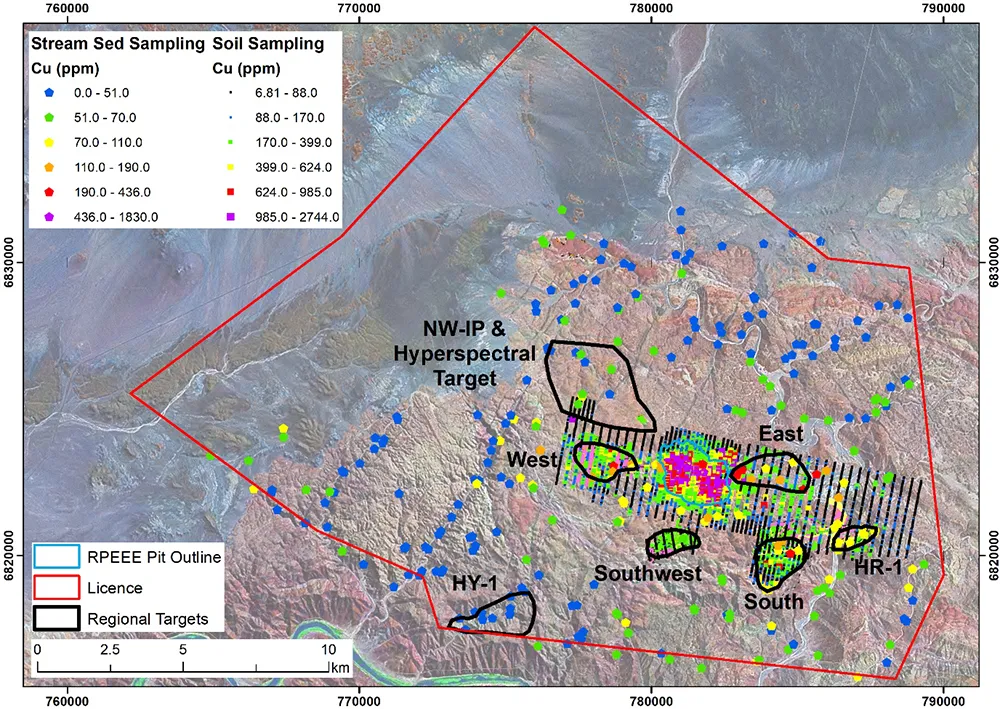
Previous work, by Teck in particular, highlighted several regional targets that had limited work carried out on them. Regional targets were identified based on satellite imagery interpretation and mapping (e.g. targets West, East, South, HR-1 and Southwest), hyperspectral colour anomalies (HY-1) and IP data (NW-IP and Hyperspectral target), as shown in this map. Limited follow up has been carried out on the targets immediately adjacent to Haib, with some drilling at South (4 drillholes), West (4) and East (12). In all cases the work performed was not sufficient to fully test the targets.
Koryx plans a regional program which will run in parallel to the PFS work at Haib during 2026, and will focus on mapping, selective sampling, ground geophysics and drilling. Available regional geophysical data is of moderate quality and an airborne magnetic survey is planned.
Metallurgical testwork including innovative technologies
Koryx’s metallurgical testwork program is well advanced, building on high-quality work carried out since 1996 and supported by the extensive exploration programs completed by Rio Tinto (1970s) and Teck Resources (2000s).
The program has two core objectives:
Confirm the feasibility of a conventional processing route – crushing, grinding, and flotation – to produce a clean, high-quality concentrate from higher-grade Haib material (>0.25% Cu)
Evaluate the feasibility of a heap-leach route for lower-grade material (<0.25% Cu).
Historical and current metallurgical testwork results have shown that the Haib mineralisation is largely hosted in a competent porphyritic granodiorite rock. The main economic element present in feed mineralisation is copper, with accessory amounts of molybdenum and gold also present. Copper is mainly present as a sulphide in the form of chalcopyrite with minor amounts of secondary chalcocite and bornite and in oxide form (chrysocolla, plancheite, malachite and azurite).
The Haib copper deposit has a long history of metallurgical testwork and studies undertaken by various parties, where the following have been reviewed for the October 2025 PEA:
- mineralogical investigations dating back to 1975 when RTZ explored the deposit
- historical comminution and flotation tests primarily completed by Mintek in South Africa with support from Amdel Limited in Australia. This programme was completed in 1996 to support the 1997 FS
- a bacterial heap leach study by the University of Witwatersrand (Wits) in South Africa in 1997
- an extensive hydrometallurgical test programme directed by the NCJV in 1997, as a supplement to the minerals processing tests already mentioned, that were used to support the 1997 FS of the Haib project
- bacterial column leach tests by Mintek South Africa in 2003
- bacterial leach tests, liberation assessments and pre-concentration scoping tests commissioned between 2019 and 2020 by METS Engineering (METS) to support a PEA originally published in 2021 and amended in 2024, in which a 20 Mtpa H/L process was considered for the recovery of copper from the deposit
- material characterisation, comminution, bulk mineralised material sorting, CPF and conventional flotation tests undertaken from 2024 to 2025 under the management of technical teams from Koryx and DRA in support of the October 2025 PEA. The majority of the testwork programme was undertaken at Maelgwyn Mineral Services Africa (Maelgwyn) in Johannesburg South Africa, with support from Geolabs in Johannesburg and Metso in Pennsylvania for the comminution testwork scope, Eriez in Johannesburg for the CPF scope, SGS in Johannesburg for mineralogical characterisation and Jameson cell flotation tests, and NextOre in Australia for bulk mineralised material sorting test work
- sequential copper analyses using progressively more intense leach conditions to confirm the copper mineral content of the samples tested which was conducted by both Mintek and Maelgwyn in Johannesburg as part of the 2025 PEA testwork program
- Tomra and Rados in South Africa have undertaken particle and bulk mineralised material sorting testwork programs, SGS South Africa has completed HLS test work to inform DMS preconcentration assessments, and Mintek as well as Ceibo in Chile are conducting further heap leach column testwork. With these companies and approaches, there will be six different lixiviants or leach regimes evaluated. This work is still ongoing.
Laboratory tasks in progress
These tasks were completed in late 2025 or are still in progress, mainly at the Maelgwyn laboratory but in some cases by laboratories mentioned above:
- crushing, milling and high-pressure grinding roll (HPGR) tests to support comminution circuit modelling
- mineralogical examination of ore sorting pre-concentrate and rejects samples, to confirm which gangue minerals were specifically rejected during ore sorting as well as main reasons for copper losses to rejects
- silver content of Haib samples was determined to be un-economic based on the PFS flowsheets
- ore sorting tests of both high- and low-grade ore using laboratory test units employing X-ray transmission (XRT) and X-Ray fluorescence (XRF) techniques to enable simulation and modelling of a potential pre-concentration circuit after secondary crushing
- coarse particle flotation tests with potential to significantly reduce tonnage reporting to conventional flotation by removing gangue minerals
- conventional copper milling and flotation tests of fresh sulphide material and in conjunction with CGR tests across a range of copper grades
- gravity and flotation recovery of gold
- Jameson rougher cell tests as an alternative to conventional copper flotation cells
- molybdenum (Mo) flotation and leaching to recover Mo to a separate marketable concentrate and remove Mo as much as possible from the main copper flotation concentrate
- geochemical column leach tests of low grade, waste rock and filtered tailings to determine the potential for acid generation and acid rock drainage
- twelve-month column leach tests of high grade (>0.28% Cu) and low grade (>0.19% Cu) sulphide samples. Two bacterial leach, three chloride leach and one nitrate-based heap leach technologies were tested
- column leach tests of one sulphuric acid, one bacterial leach process and one chloride leach process to recover copper from oxide/transitional ore in which about 75% of copper was present in silicate minerals, 15% as secondary sulphides and about 10% as primary chalcopyrite
Trade-off studies and additional technical assessments
The results of the metallurgical tests are used to continue process trade-off studies:
- Simulation of pre-concentration flowsheets including bulk rock sorting in the crushing circuit. Further work is required to optimise the ore sorting and CGR pre-concentration steps ahead of conventional copper flotation.
- Coarse particle flotation tests confirmed that a CGR step in the primary milling circuit should enable about 15-20% of mill feed to be rejected as a coarse tailings stream without reducing overall copper recovery. This step was incorporated in the base case flowsheet for the PEA Technical Report, resulting in a low-cost increase in processing capacity.
- Concentrator and hydrometallurgical plant capacity determination based on revenue versus cost trade-offs. A 28 Mtpa concentrator plant and 7 Mtpa hydrometallurgical plant were selected for the PEA Technical Report.
- Technical comparisons of alternative pre-concentration and leach processes to recover copper from low grade chalcopyrite mineralisation containing less than about 0.225% Cu. For the lower-grade parts of the ore body, only a few processing methods have shown they can recover copper effectively and remain commercially viable. These include sorting the ore before processing, followed by heap leaching using bacteria, or heap leaching supported by chloride or nitrate.
Several additional trade-off studies will be included in later phases of project development, including:
- Cost and transportability comparison of flotation concentrate and copper cathode by road or rail to Walvis Bay as an alternative to transporting all product by road to Lüderitz.
- Consideration of different materials handling equipment to transport low-grade mineralisation to the heap leach pad. A rail-run conveyor will be considered as well as the base case of a belt conveyor following tertiary crushing.
- Generation of electrical power using renewable and battery storage technology, supplemented by diesel generation, versus sourcing of power solely from the national and regional grid in Namibia. For the technical report, 37% of power sourced from a planned Photo Voltaic (PV) Plant was included in the cost estimates.
- Consideration of alternative water supply sources with conceptual design and costing studies.
These studies were used for the preliminary design and cost estimates for the concentrator process flowsheet outlined in the 2025 PEA technical report, as well as infrastructure designs and cost estimates by Knight Piésold and other consultants. Additionally, a separate hydrometallurgical plant design and cost estimate was developed, building on earlier work from 2020 and 2021 and supplemented with data from DRA’s cost database.
Coarse particle flotation:
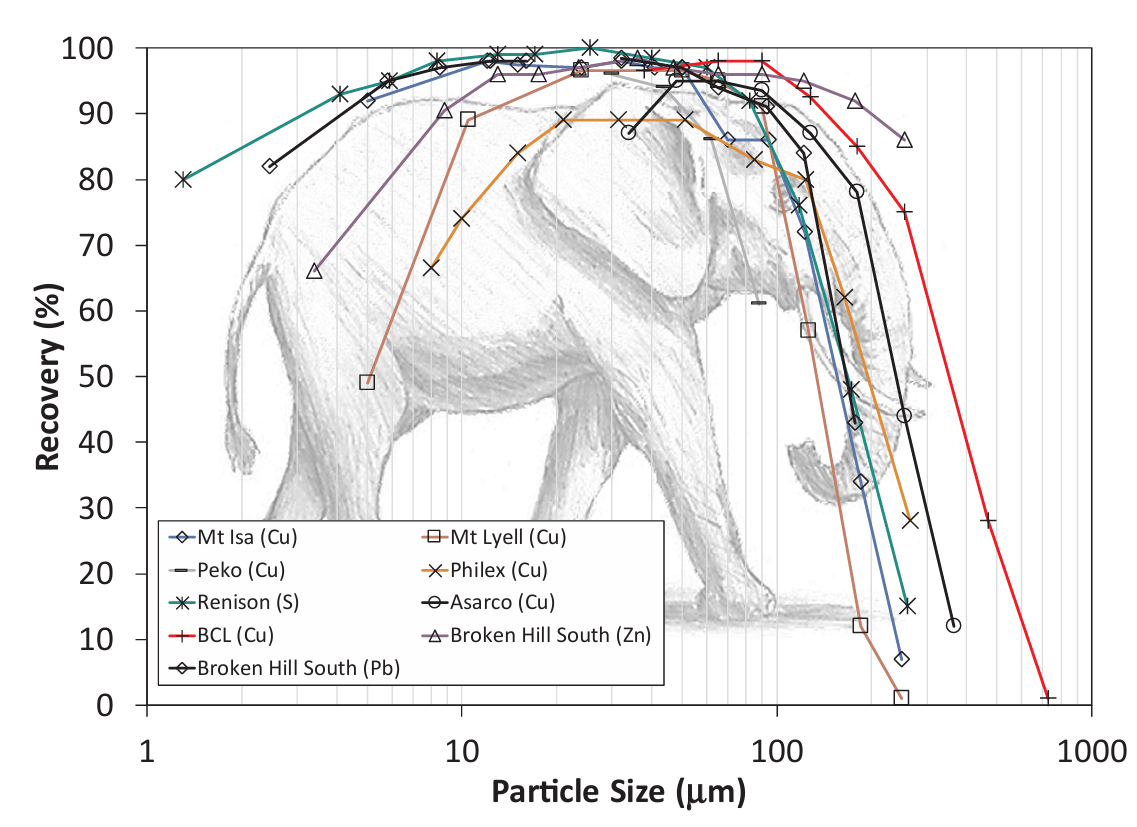
Coarse particle flotation (CPF) allows copper-bearing particles to be separated from waste at a larger particle size than conventional flotation. At Haib, this creates an opportunity to remove low-copper waste earlier, reducing the material requiring further grinding and flotation.
The “elephant curve” illustrates how flotation recovery changes with particle size. Conventional flotation works best within a limited range, with recovery falling as particles become too coarse. CPF uses gentler conditions and upward-flowing water to help larger copper-bearing particles remain attached to air bubbles and float. This extends the effective particle-size range, often described as “raising the elephant’s trunk”.
Haib’s proposed processing flowsheet applies CPF through coarse gangue rejection (CGR). Copper-bearing particles recovered by CPF return to the mill for further grinding, while coarse waste containing very little copper leaves the circuit as tailings.
Removing this material early is designed to reduce unnecessary grinding and deliver a higher-grade feed to the main flotation plant. The objective is to use energy and plant capacity more efficiently, supporting higher throughput while maintaining target copper recovery.
Corporate Presentation
Explore Koryx Copper’s projects, strategy and development plans in our latest corporate presentation.
Qualified person
The MRE was undertaken by Mr. J.C. Witley (BSc Hons, MSc (Eng.)), Head of Mineral Resources for The MSA Group (an independent consulting company), registered with the South African Council for Natural Scientific Professions (SACNASP) and a Fellow of the Geological Society of South Africa (GSSA). Mr. Witley has the appropriate relevant qualifications and experience to be considered a “Qualified person” for the style and type of mineralisation and activity being undertaken as defined in NI 43-101 and is considered independent pursuant to NI 43-101.
The technical and scientific information contained on this website has been reviewed and approved by Mr. Dean Richards Pr.Sci.Nat., MGSSA – BSc. (Hons) Geology, who is a ‘Qualified Person’ as defined by National Instrument 43-101 – Standards of Disclosure for Mineral Projects. Please visit www.sedarplus.ca for further information on the technical data provided.